
This week in our poetry news round up we look at the newly announced shortlists for the 2026 Forward Prizes for Poetry and the death of the poet and art critic Edward Lucie-Smith.
2026 Forward Prize Shortlists Announced
The shortlists for the 2026 Forward Prizes for Poetry were announced on Thursday July 16th, narrowing the field to twenty poets across the four categories. Founded in 1992 by William Sieghart, the Forward Prizes have grown into the most influential awards for new poetry in the UK and Ireland, and this year’s judging panel is chaired by the novelist, memoirist and essayist Sarah Moss, whose books include Ghost Wall and My Good Bright Wolf. She is joined by the poet and novelist Romalyn Ante, emeritus professor and poet WN Herbert, Glasgow-based poet and spoken-word artist Michael Mullen, and the Nigerian-British writer Yomi Ṣode. In announcing the list, Moss praised a deeply exciting range of work, taking in grief, laughter, old age, embodiment and landscape, alongside lamentation, celebration and observation.
The shortlist for the £10,000 Best Collection prize brings together Tishani Doshi for Egrets, While War (Bloodaxe), Sarah Howe for Foretokens (Chatto & Windus), Keith Jarrett for Hide Me Under the Blood and I Shall Be Satisfied (Bad Betty Press), Karen McCarthy Woolf for Unsafe (Bloomsbury) and Caroline Smith for Bycatch (Nine Arches Press). The Best Single Poem – Written category features Tara Bergin’s ‘The Fear’, Kizziah Burton’s ‘Portrait of my Daughter as Postmortem with Needle’, Alexandra Corrin-Tachibana’s ‘Madam Gout’, Fiona Larkin’s ‘Absence has a grammar’ and Riwa Saab’s ‘night guard’. The Best Single Poem – Performed shortlist recognises Ellie Rose Amit, Francis-Xavier Mukiibi, Takunda Muzondiwa, Maureen Onwunali and Biff Smith. As ever the lists span established names and emerging voices, and Mullen himself knows the territory from the other side, having been shortlisted last year for the Jerwood Prize for Best First Collection with his debut Goonie. The winners will be revealed at a ceremony at London’s Southbank Centre on Saturday October 24th, with the Forward Arts Foundation’s National Poetry Day following soon after.
Poet and Art Critic Edward Lucie-Smith Dies Aged 93
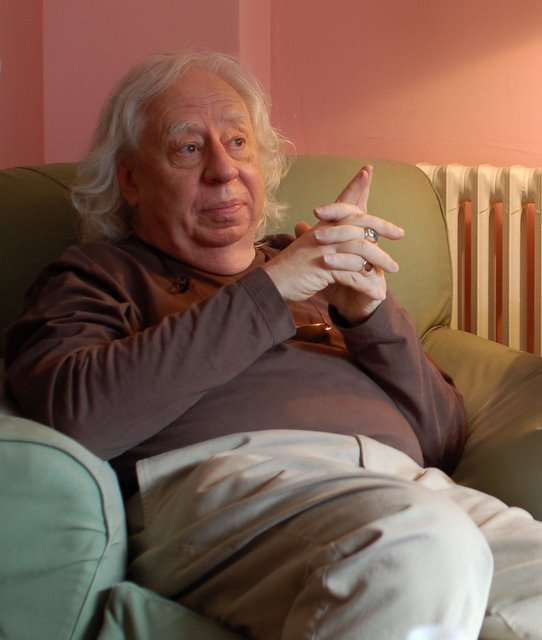
By Argentovs – Own work, CC BY-SA 3.0, https://commons.wikimedia.org/w/index.php?curid=5546542
Edward Lucie-Smith, the Jamaican-born English writer, poet, art critic, curator and broadcaster, has died at the age of 93. Born John Edward McKenzie Lucie-Smith in Kingston, Jamaica, on 27th February 1933, into a family that had lived on the island since the seventeenth century, he moved to England in 1946 following the death of his father. He was educated at The King’s School, Canterbury, before winning a scholarship to Merton College, Oxford, where he read History and wrote art criticism for the student magazine Isis, graduating in 1954. After two years as an education officer in the Royal Air Force and a decade writing advertising copy in London, he committed himself fully to freelance writing in the mid-1960s.
His first reputation was as a poet. His debut collection, A Tropical Childhood and Other Poems, appeared in 1961 and won both the John Llewellyn Rhys Memorial Prize and an Arts Council Triennial Award, announcing a writer with an eye for concrete detail and an ear for rhythm. Around the same time he founded The Group, a regular gathering of London poets who set themselves against the modernist fashions of the day, and he would go on to edit influential anthologies including British Poetry Since 1945. From the late 1960s his focus shifted increasingly towards art, and it is as one of the most prolific art writers of his generation that he became best known, writing or editing more than a hundred books over a career spanning six decades. Titles such as Movements in Art Since 1945 and Art Today became widely read introductions to modern and contemporary art, while his collaboration with the American feminist artist Judy Chicago on Women and Art: Contested Territory reflected his willingness to engage seriously with feminist art at a time when many male critics of his generation did not. He profiled artists from Andy Warhol to Jean-Michel Basquiat, broadcast for BBC Radio 3, and remained a working critic, serving as chief reviewer for Artlyst for his final fifteen years and contributing to ArtReview for nearly thirty. A Fellow of the Royal Society of Literature since 1964, he stayed as opinionated and as readable to the very end.



You must register to comment. Log in or Register.