
This week in our poetry news round up we look at the Canadian poet Anne Carson, who has been awarded the Nobel Prize in Literature, and the shortlist for this year’s T. S. Eliot Prize.
Anne Carson Awarded the 2026 Nobel Prize in Literature
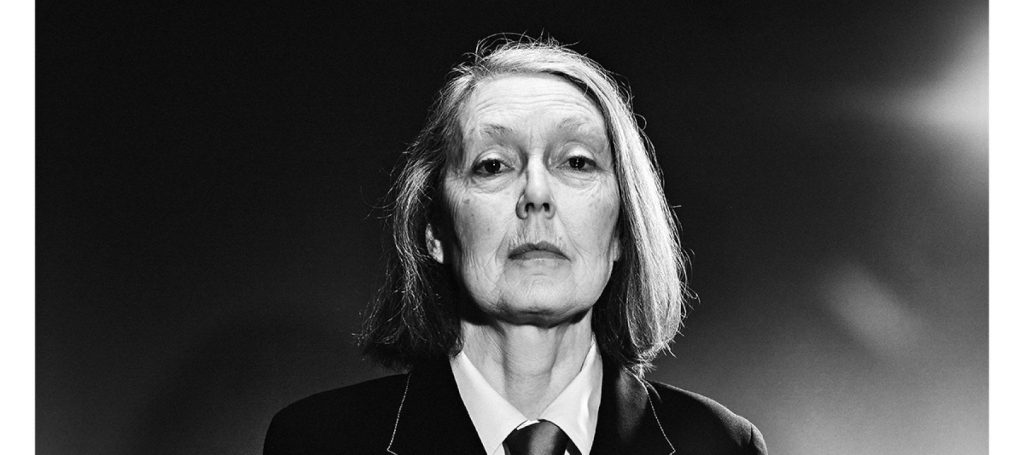
Anne Carson © Jeff Brown
Anne Carson, the Canadian poet, essayist, translator and classicist, has been named as the winner of the 2026 Nobel Prize in Literature. The announcement was made on Thursday by the Swedish Academy in Stockholm, who honored the 76-year-old for what they called her “bold and inventive oeuvre”, a body of work that they said has created new forms for contemporary literature through its playful dialogue with the classical tradition.
Carson, who has long been tipped as a possible winner, was in Iceland, where she has a home, when the call came. According to Ingrid Carlberg, the permanent secretary of the Academy, the poet was taken very much by surprise and only had time to say that she was “listening to the wind”. Speaking later to the Icelandic broadcaster RÚV, she joked that the Academy must be crazy.
Born in Toronto in 1950, Carson fell in love with the classical world at high school, where a Latin teacher offered to teach her ancient Greek during the lunch hour. She went on to study classics at the University of Toronto, dropping out twice before eventually completing her BA, MA and PhD there, and has since taught at universities including McGill, Michigan and Princeton.
Her first book, Eros the Bittersweet, an essay on love and longing in the writing of ancient Greece, was published in 1986. It was Autobiography of Red, in 1998, that brought her to a much wider audience. A novel in verse, it reimagines the Greek myth of Herakles and the red-winged monster Geryon as a modern coming-of-age love story, and is often regarded as her finest work.
Carson’s writing has never sat comfortably in any one category, mixing poetry with essay, fiction, drama and translation. She won Canada’s Griffin Poetry Prize in its very first year, 2001, for Men in the Off Hours, and went on to become the first woman to win the T. S. Eliot Prize, for The Beauty of the Husband, seeing off a shortlist that included Seamus Heaney. She is also much admired as a translator, in particular for If Not, Winter, her version of the fragments of Sappho. When asked by the Nobel committee about her own sources of inspiration, she named Homer.
The prize, which is worth 12 million Swedish kronor, will be presented at a ceremony in Stockholm on 10th December. She is only the 19th woman to win the award, and the first Canadian to do so since Alice Munro in 2013.
T. S. Eliot Prize 2026 Shortlist Announced
The shortlist for this year’s T. S. Eliot Prize, the most valuable prize in British poetry, was announced on Monday. Ten collections were chosen by the judges from the 174 that were submitted by 65 British and Irish publishers.
The list is a real mixture of the well known and the less familiar. Amongst the most recognizable names is Andrew Motion, who was Poet Laureate from 1999 to 2009 and is shortlisted for Gravity Archives. He is joined by the Pulitzer Prize-winning American poet Jorie Graham for Killing Spree, and by Kim Moore, a previous winner of the Forward Prize for Best Collection, for The House of Broken Things.
The remaining places go to Keith Jarrett for Hide Me Under the Blood and I Shall Be Satisfied, Imani Mason Jordan for PIVOT, Sylvia Legris for Sleep Gate, Shara McCallum for Behold, Holly Pester for Cafés, Jana Prikryl for The Channel and Billy Ramsell for Render. The list includes one debut and two second collections, and features books from small presses as well as the larger publishing houses.
The judges this year are the poets Leontia Flynn, who is the chair, Ishion Hutchinson and Daisy Lafarge. Flynn said that each of the ten books is a reminder of why people turn to poetry “when nothing else makes much sense”.
Each of the shortlisted poets will receive £1,500. They will read from their work at the Royal Festival Hall in London on 17th January 2027, and the winner of the £25,000 prize will be announced the following day. Last year’s winner was the Canadian poet Karen Solie for her collection Wellwater.



You must register to comment. Log in or Register.